Environmental Engineering UPN Veteran Yogyakarta Promotes Sustainable Water Treatment Solutions for Indonesian Migrant Communities in Malaysia
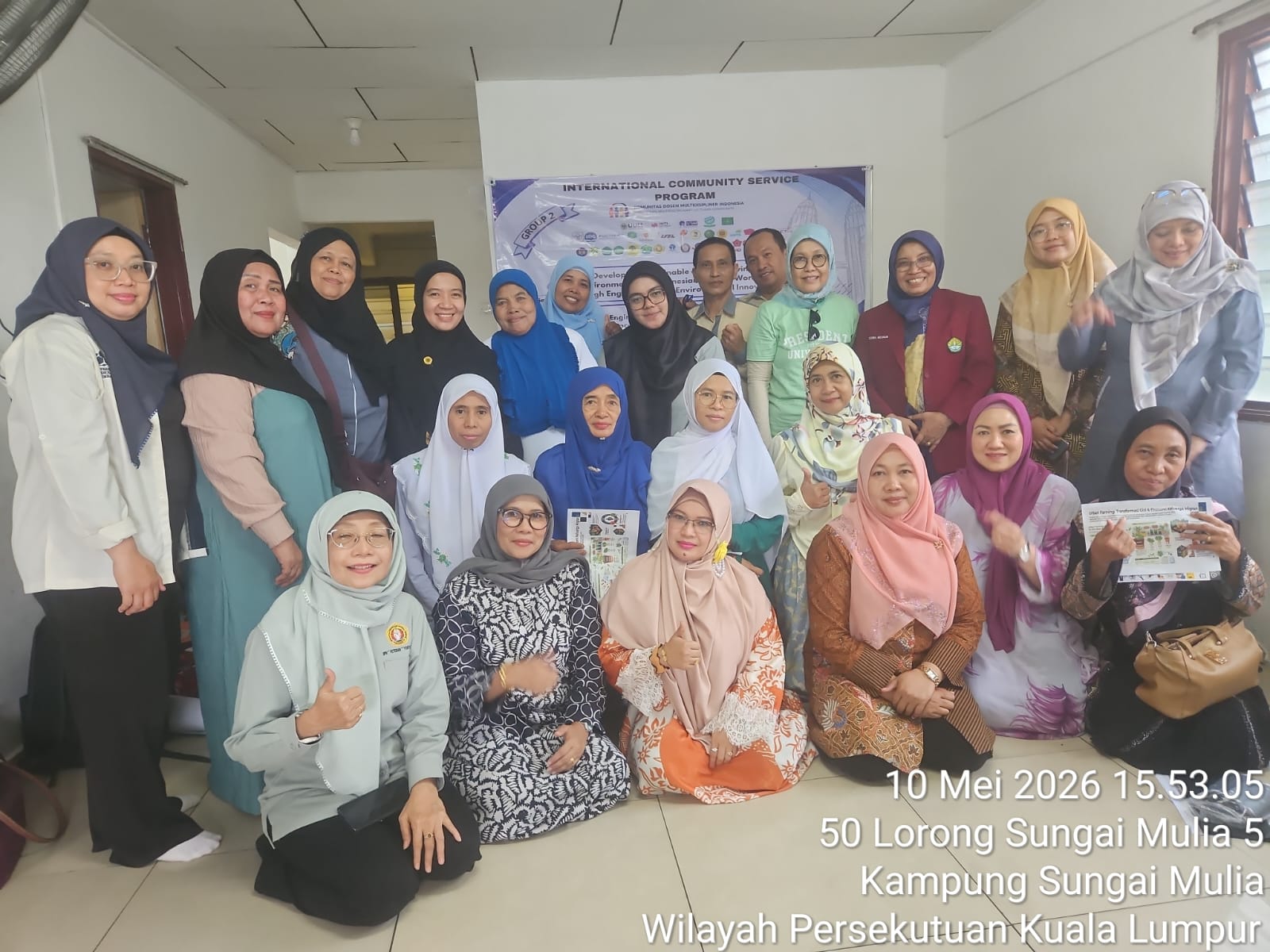
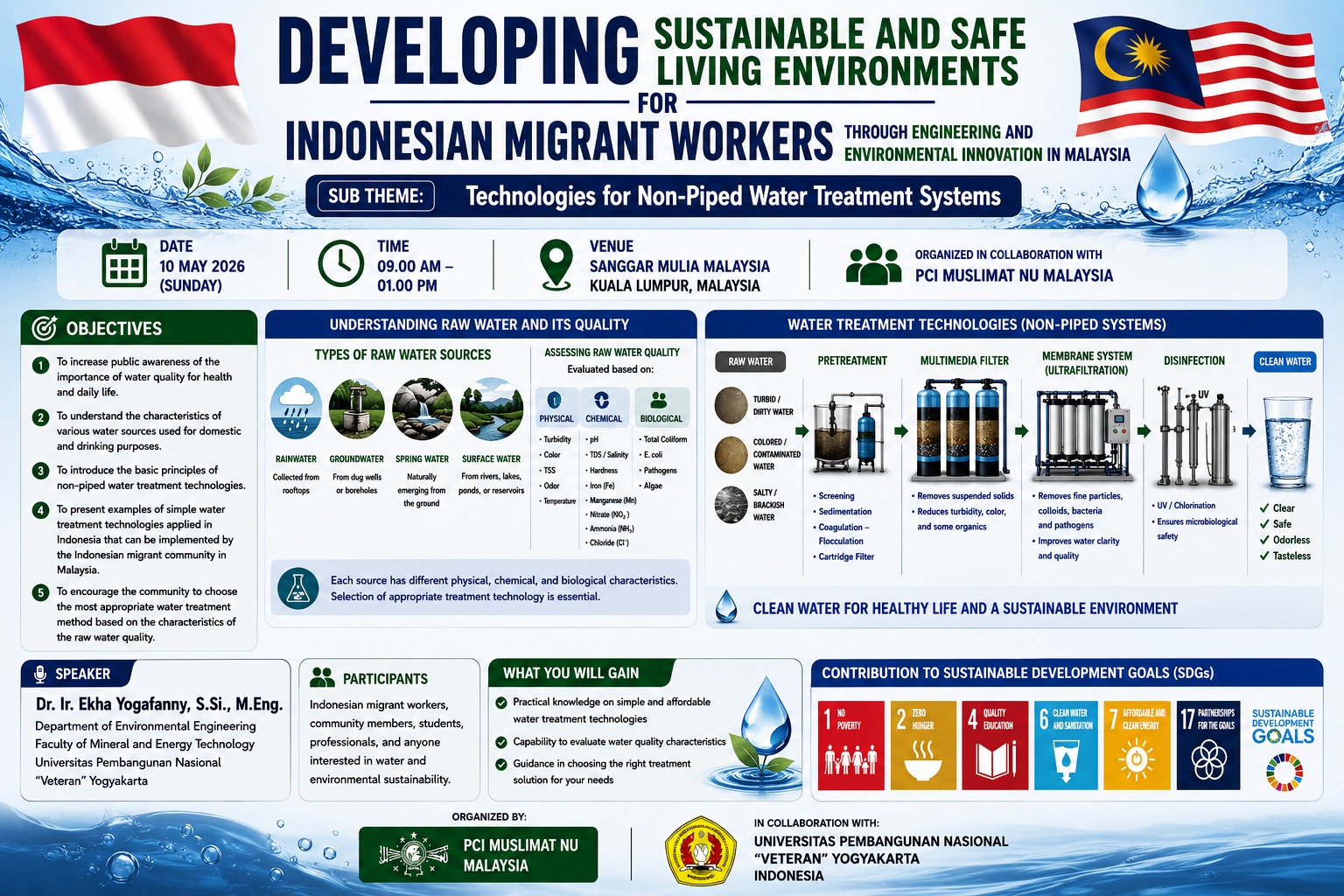
As part of its commitment to disseminating environmental engineering knowledge beyond national borders, the Department of Environmental Engineering, Faculty of Mineral and Energy Technology, Universitas Pembangunan Nasional "Veteran" Yogyakarta (UPN Veteran Yogyakarta), participated in an international community engagement program entitled "Developing Sustainable and Safe Living Environments for Indonesian Migrant Workers through Engineering and Environmental Innovation." The program was held on 10 May 2026 at Sanggar Mulia Malaysia, in collaboration with PCI Muslimat NU Malaysia.
Representing the department, Dr. Ir. Ekha Yogafanny, S.Si., M.Eng. delivered a technical session on "Technologies for Non-Piped Water Treatment Systems," highlighting practical engineering approaches for improving access to safe water in communities that rely on decentralized water sources.
The presentation emphasized that ensuring safe drinking water extends beyond the availability of water resources. Understanding the characteristics of raw water—including groundwater, rainwater, surface water, and well water—is essential before selecting an appropriate treatment process. Participants were introduced to the importance of evaluating physical, chemical, and microbiological water quality parameters to determine suitable treatment technologies.
Drawing upon both research findings and field applications in Indonesia, the session introduced a range of non-piped water treatment technologies, including aeration, sedimentation, slow sand filtration, multimedia filtration, activated carbon, zeolite adsorption, and membrane filtration. Rather than focusing solely on treatment units, the discussion explained the engineering principles governing each process, enabling participants to understand why different water sources require different treatment strategies.
The program attracted enthusiastic participation from members of the Indonesian migrant worker community. During the interactive discussion session, participants shared experiences regarding water quality challenges encountered in their hometowns, such as excessive iron concentrations, seasonal turbidity, unpleasant odors, and deteriorating groundwater quality. These real-world cases provided valuable opportunities to relate environmental engineering concepts to practical community needs.
A key message delivered throughout the activity was that sustainable water treatment does not always require sophisticated infrastructure. Appropriate technologies that are affordable, simple to operate, and based on locally available materials can significantly improve household water quality while supporting long-term environmental sustainability. Participants also gained a better understanding of how preventive measures, including source water protection and proper environmental management, are fundamental components of safe water supply systems.
Beyond community education, this international outreach activity demonstrates how academic expertise and research outcomes from the Department of Environmental Engineering can be translated into practical solutions for society. The initiative reflects the department's ongoing efforts to bridge scientific knowledge with real-world applications while strengthening international community partnerships.
The program also contributes directly to several Sustainable Development Goals (SDGs), particularly SDG 6 (Clean Water and Sanitation) through the promotion of accessible water treatment technologies. Furthermore, the activity supports SDG 1 (No Poverty) by enhancing community resilience, SDG 4 (Quality Education) through knowledge transfer, SDG 7 (Affordable and Clean Energy) by encouraging resource-efficient environmental technologies, and SDG 17 (Partnerships for the Goals) through collaboration between higher education institutions and Indonesian community organizations in Malaysia.
Through initiatives such as this, the Department of Environmental Engineering at UPN Veteran Yogyakarta continues to demonstrate that environmental engineering is not only about developing technologies, but also about empowering communities with practical knowledge to build healthier, safer, and more sustainable living environments. International community engagement remains an integral part of the department's mission to transform research and innovation into meaningful societal impact.